October 07, 2026


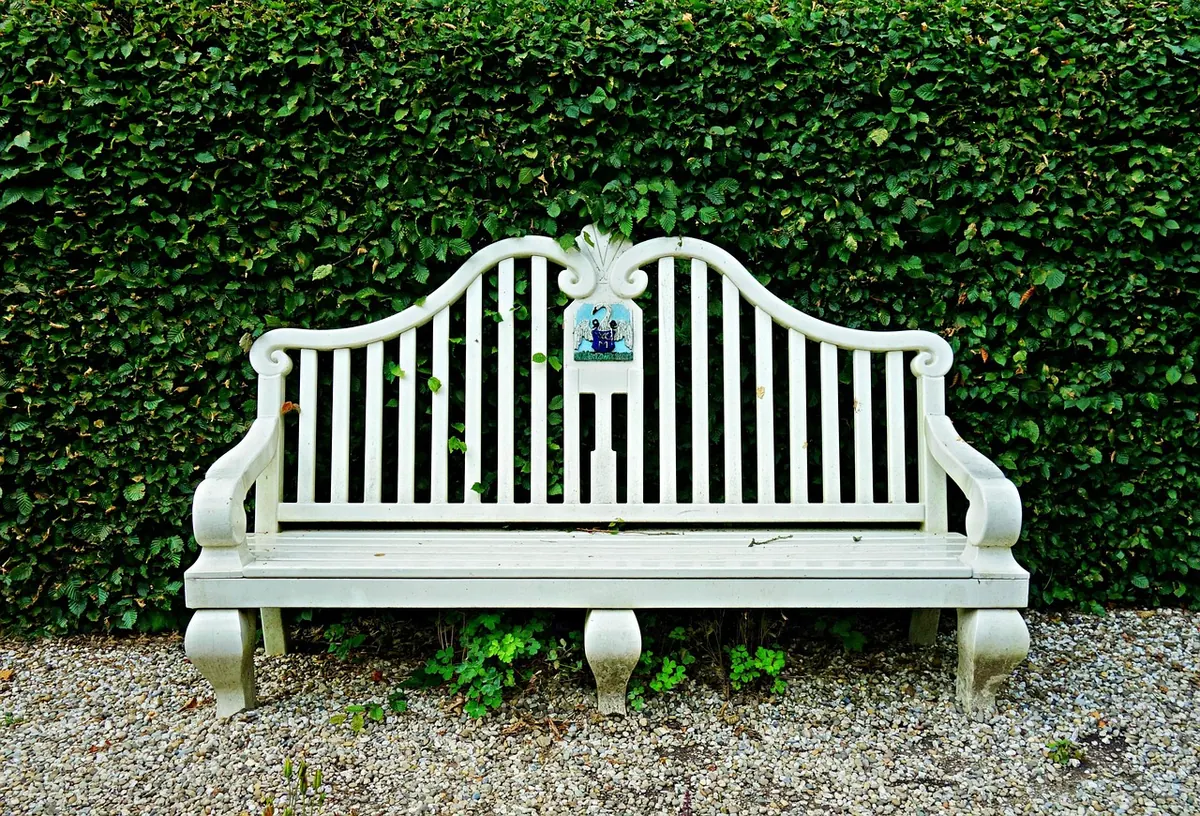
A garden bench takes more weather than anything else you own that lives outdoors. It sits out through February gales, weeks of fine drizzle, a fortnight of hard frost, then a dry spell that cracks the lawn beneath it. Whatever you choose will be rained on for years. So the useful question isn't which one looks better on the patio — it's which one is still sound, comfortable and safe to sit on after a decade of British weather has had a go at it.
Rain is only half the story. The real damage comes from the cycle: wet, dry, wet again, then a cold snap while the material is still holding water. Timber swells and shrinks with every change, which works joints loose and opens small cracks. Porous stone soaks up water, and if that water freezes inside the surface it flakes and pits the face of the bench. Algae, moss and lichen colonise anything that stays damp and shaded — usually the north-facing side and anything under a tree. Wind matters too, particularly for a light bench left out in an exposed garden.
Most garden stone benches are cast or reconstituted stone, with sandstone, limestone and granite versions further up the scale. Their great advantage is that they simply don't care much. No rot, no woodworm, no annual oiling, no wobble. A heavy bench stays where you put it, which matters on a windy corner where a lighter seat would tip.
The trade-offs are real, though. Stone is cold, and it stays cold — thermal mass means it's unpleasantly chilly on a bright March morning and slow to warm even in sun. It's hard on the back and hips after twenty minutes. Porous stone holds water, and repeated freeze-thaw can spall the surface over time, especially on softer sandstone and limestone. Algae make wet stone slippery, so a shaded bench can become genuinely hazardous. And you need a properly firm, level base: slabs, or compacted hardcore under a paving course. Put a heavy stone bench on soft ground and it will settle unevenly, rock, and eventually crack.
Timber is gentler to sit on, slightly forgiving, and it warms to your body rather than pulling heat out of it. It's easier to move, easier to repair slat by slat, and generally easier on the budget. It's also the material that asks something of you.
Rot begins where water sits and air can't move: the feet in contact with soil, the joints, the end grain, the underside of flat arms. Durable hardwoods such as teak, iroko, robinia and sweet chestnut last well untreated, and teak will weather to a soft silver grey that many people prefer to fresh timber. Pressure-treated softwood can give good service but you should expect a shorter life, and the treatment only protects what it has penetrated — every cut end needs attention. As for finishes: varnish is a poor choice outdoors because it cracks, traps moisture underneath and then peels in sheets. An oil or a penetrating stain is far more forgiving.
Stone wins outright on lifespan and wood wins on repairability. A stone bench may outlast its owner; a wooden one can be kept going indefinitely if you replace the odd slat and tighten the fixings.
Stone needs a scrub when it goes green. Wood needs a proper look once a year and a re-oil every year or two, which is perhaps an hour's work.
Wood, comfortably, unless you plan to keep cushions out — and in Britain that means bringing them in every night, or buying waterproof ones and accepting they'll still feel damp.
They resist differently. Stone doesn't rot but it holds water and can be damaged by frost. Wood sheds water well when oiled and dries quickly when air can circulate around it, but rots fast wherever water is trapped.
The single biggest factor in how long any bench lasts is where you put it. Avoid the drip line of a roof without guttering, the patch under a tree that never dries, and the corner where the lawn floods every February. A bench on a hard, free-draining base with air moving underneath will outlast an identical one standing in soil.
Stone copes with the weather. Wood copes with the weather if you help it. If your bench will sit in one spot for twenty years and you'd rather forget about it, choose stone and spend the money on a decent hard base beneath it. If you want to sit for an hour with a book, or you may move house, or you want to shift the bench with the sun, choose timber — ideally a durable hardwood — and accept the annual hour of oiling and checking. For many gardens the sensible middle path is a hardwood bench on a stone or concrete pad, or a metal frame with timber slats, which gives you the warmth of wood with fewer points where damp can settle.
Photo: Robert So / Pexels
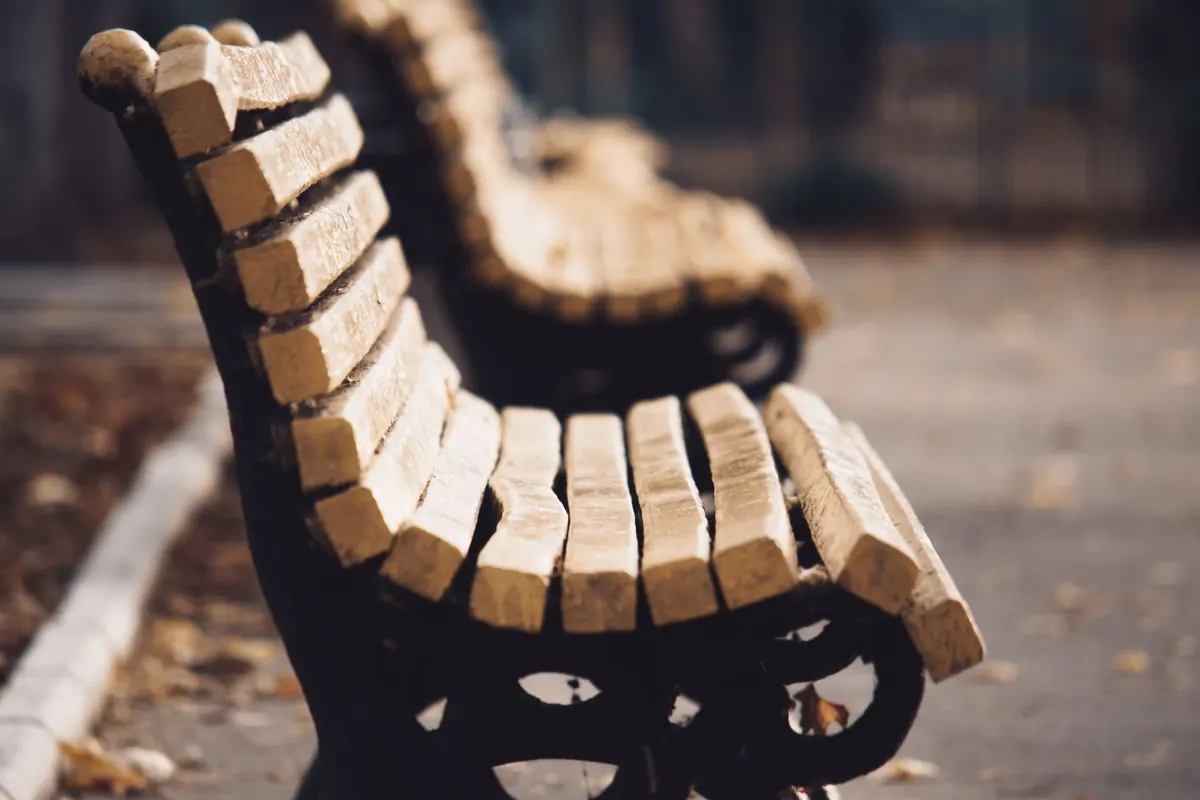
Handcrafted stone benches for gardens and landscapes.
Copyright © 2026 Pebble Bench. All rights reserved. Pebble Bench.